
The electric vehicle revolution is no longer coming — it is already here. With rapid advancements in battery technology and increasing environmental awareness, more people are considering electric vehicles (EVs) as their next car. But instead of buying brand new, many buyers are now exploring the used electric car market.
Buying a used EV can be a smart financial move, but it also comes with specific risks and considerations that differ from traditional gasoline cars. This complete guide will help you understand everything you must know before purchasing a pre-owned electric vehicle, from battery health to charging compatibility and long-term ownership costs.
Why Consider Buying a Used Electric Car?
A used electric vehicle offers several advantages compared to a brand-new EV.
1. Lower Purchase Price
New electric cars can be expensive due to advanced battery technology. However, a second-hand electric car typically costs significantly less, making EV ownership more accessible.
2. Reduced Depreciation
Electric cars depreciate quickly in their first few years. Buying a used EV means someone else has already absorbed that depreciation.
3. Lower Maintenance Costs
EVs have fewer moving parts than internal combustion engine vehicles. There is no engine oil, no spark plugs, and fewer mechanical components to fail. This makes EV maintenance cost generally lower.
The Most Important Factor: Battery Health
When buying a used electric car, battery condition is everything.
The battery is the most expensive component of an EV. A degraded battery means reduced driving range and possible costly replacement.
What to Check:
- Battery health percentage
- Remaining warranty coverage
- Charging history
- Average range compared to original range
Many modern EVs allow you to check battery health reports through onboard diagnostics or certified service centers.
Why Battery Health Matters
A new battery can cost thousands of dollars. Always verify if the EV battery warranty is still valid. Many manufacturers offer 8-year or 100,000-mile battery warranties.
Understand Real-World Driving Range
One of the most searched topics online is real-world EV range.
Manufacturers advertise ideal range numbers under test conditions. However, the actual range of a used electric vehicle may be lower due to:
- Battery degradation
- Climate conditions
- Driving habits
- Software updates
Always test drive the vehicle and compare displayed range with expected specifications.
Charging Compatibility & Infrastructure
Before buying a pre-owned electric vehicle, ensure it supports charging standards in your area.
Key things to check:
- Home charging compatibility
- Fast charging support
- Charging port type
- Public charging network availability
If the vehicle does not support fast charging, long-distance travel could become inconvenient.
Check the Service History
Just like traditional cars, service history matters.
Ask for:
- Complete service records
- Battery inspections
- Software updates history
- Accident repair reports
A well-maintained used EV is far more reliable than one with missing records.
Compare Used EV vs New EV
Many buyers search for used EV vs new EV comparison.
Here’s a quick breakdown:
| Factor | Used EV | New EV |
| Price | Lower | Higher |
| Warranty | Limited | Full |
| Battery Life | Slightly reduced | Full capacity |
| Technology | May be older | Latest features |
If budget is your main concern, a used electric car makes sense. If you want the latest tech and maximum range, a new EV may be better.
Inspect Charging Equipment
Some used EVs include home charging cables. Make sure:
- Charger works properly
- No visible damage
- Compatible with your home setup
Replacing EV charging equipment can be costly.
Software & Technology Updates
Modern EVs rely heavily on software. Check if:
- The vehicle supports over-the-air updates
- Infotainment system works properly
- Driver assistance features function correctly
Older models may lack advanced features like adaptive cruise control or autonomous driving support.
Insurance for Used Electric Cars
Many people search for EV insurance cost.
Insurance premiums for electric cars can sometimes be slightly higher due to battery replacement costs. Always compare insurance quotes before purchasing.
Hidden Costs to Consider
When calculating the total cost of ownership of a used EV, consider:
- Battery replacement risk
- Charging installation at home
- Insurance premiums
- Tire replacement (EVs are heavier)
Despite this, overall electric vehicle ownership cost is usually lower than gasoline cars.
Signs You Should Avoid a Used EV
Avoid the car if:
- Battery health is below 70%
- No service records available
- Major accident damage
- Charging issues
- Warranty expired without inspection
Buying the wrong pre-owned electric vehicle can turn into an expensive mistake.
Is Buying a Used Electric Car Worth It?
For most buyers, yes.
A used electric vehicle offers lower purchase price, reduced running costs, and eco-friendly driving. However, due diligence is essential.
If battery health is strong and warranty coverage exists, a second-hand EV can be an excellent long-term investment.
Final Checklist Before Buying
Before signing the deal:
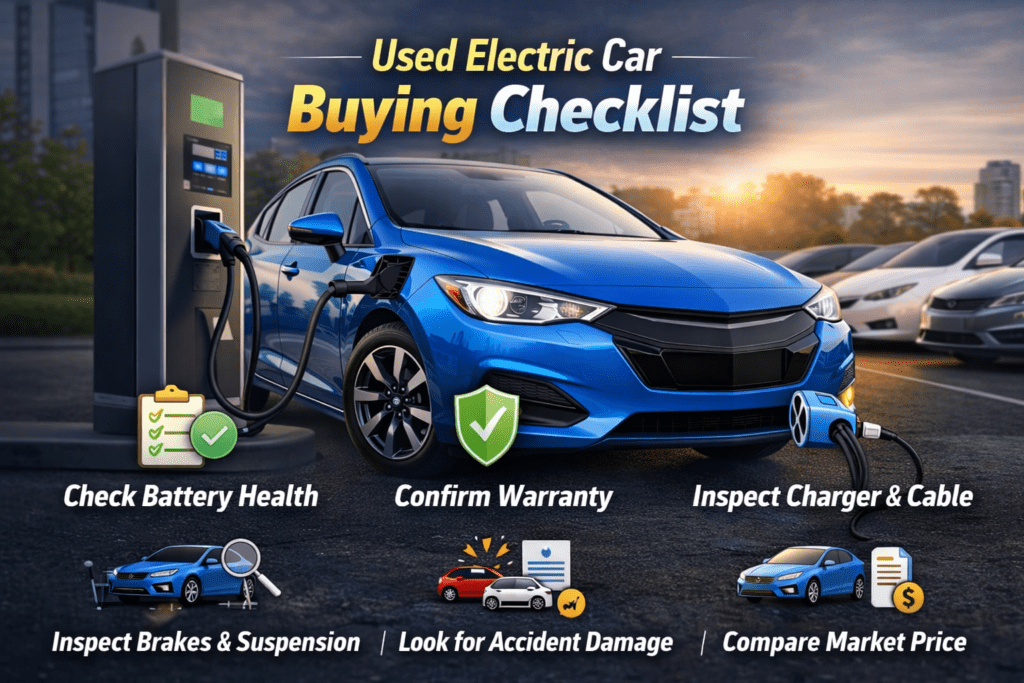
- Check battery health report
- Confirm warranty validity
- Test drive the vehicle
- Verify charging compatibility
- Inspect service records
- Compare insurance quotes
- Negotiate price based on battery condition
Following this checklist will protect you from common used EV buying mistakes.
Frequently Asked Questions (FAQ)
1. Is buying a used electric car safe?
Yes, if the battery health is good and service records are verified.
2. How long do EV batteries last?
Most EV batteries last 8–15 years depending on usage and maintenance.
3. Is battery replacement expensive?
Yes, battery replacement cost can be high, which is why warranty matters.
4. Do used electric cars have good resale value?
Resale value depends largely on battery condition and brand reputation.
5. Are used EVs cheaper to maintain?
Yes, EVs generally have lower maintenance costs than gasoline cars.
6. How do I check battery health?
Through onboard diagnostics or certified EV service centers.
7. Can I install home charging for a used EV?
Yes, most electric vehicles support home charging installation.
8. Do electric cars lose range over time?
Yes, battery degradation reduces range gradually.
9. Is insurance expensive for electric vehicles?
Insurance can be slightly higher due to battery replacement costs.
10. Should I buy a used EV or a hybrid car?
If you have charging access, a used EV is usually more cost-effective long term.