
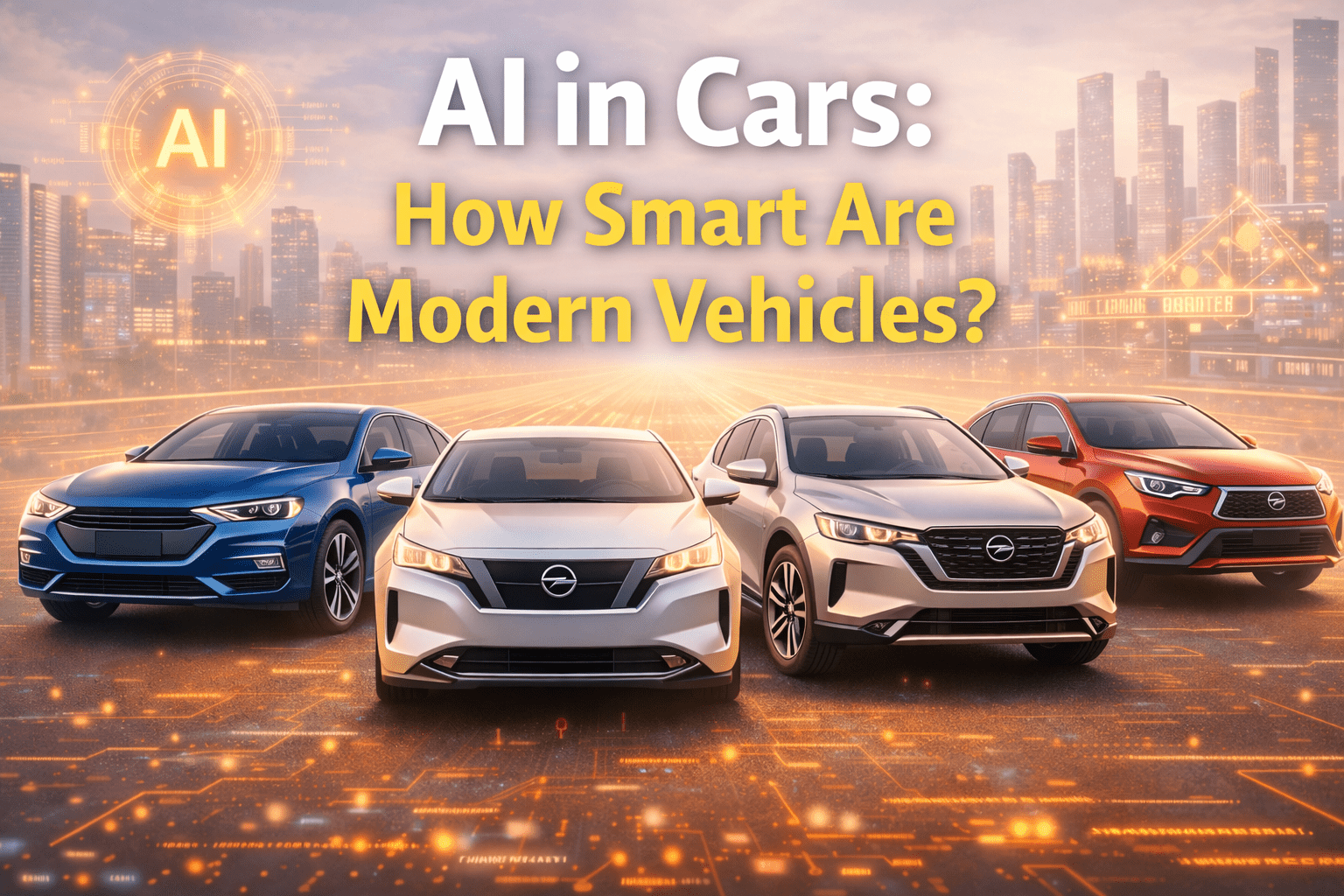
Artificial Intelligence is no longer just a futuristic concept — it is already transforming the way we drive. From self-driving capabilities to intelligent safety systems, modern vehicles are becoming smarter than ever before. Today’s cars are equipped with AI in cars, smart vehicle technology, and advanced driver assistance systems (ADAS) that improve safety, comfort, and overall driving experience.
In this guide, we’ll explore how smart modern vehicles really are, what technologies power them, and whether AI is truly making cars better.
🧠 What Is AI in Cars?
Artificial Intelligence in cars refers to the use of software, sensors, and machine learning algorithms that allow vehicles to analyze data, make decisions, and assist drivers.
Modern cars can:
- Detect obstacles
- Understand road conditions
- Learn driver behavior
- Make real-time decisions
AI is now deeply integrated into vehicles, improving safety, efficiency, and user experience.
👉 Keywords: AI in cars, smart cars, automotive AI technology
🚀 How AI Is Making Cars Smarter
AI is not just one feature — it powers multiple systems inside a car. Let’s break down the most important ones.
🛡️ 1. Advanced Driver Assistance Systems (ADAS)
One of the most common uses of AI is ADAS technology.
Key features:
- Adaptive cruise control
- Lane keeping assist
- Automatic emergency braking
- Blind spot detection
These systems use sensors, cameras, and AI algorithms to monitor surroundings and prevent accidents.
👉 Keywords: ADAS features, car safety technology, driver assistance systems
🤖 2. Self-Driving (Autonomous Driving)
AI is the backbone of self-driving cars.
How it works:
- Cameras and sensors scan surroundings
- AI processes data in real-time
- Vehicle makes driving decisions
Self-driving cars are classified into levels (L0–L5), with full autonomy still under development.
👉 Keywords: self driving cars, autonomous vehicles, AI driving technology
📡 3. Smart Navigation Systems
Modern navigation systems use AI to provide better routes.
Features:
- Real-time traffic updates
- Route optimization
- Predictive navigation
AI learns from past driving patterns to suggest faster and more efficient routes.
👉 Keywords: smart navigation, AI GPS systems, intelligent routing
🎙️ 4. Voice Assistants and Personalization
Cars are becoming more like smartphones.
AI-powered features:
- Voice commands
- Personalized settings
- Smart recommendations
Some cars can adjust seat position, music, and temperature based on driver preferences.
👉 Keywords: voice assistant cars, personalized driving experience, smart infotainment
🔧 5. Predictive Maintenance
AI can detect issues before they become serious problems.
Benefits:
- Alerts before breakdown
- Reduces repair costs
- Improves vehicle lifespan
AI analyzes data from sensors to predict when parts need servicing.
👉 Keywords: predictive maintenance cars, car diagnostics AI, smart vehicle health
👁️ 6. Computer Vision and Sensors
AI uses advanced sensors to “see” the environment.
Technologies used:
- Cameras
- Radar
- LiDAR
- Ultrasonic sensors
These systems help cars detect objects, pedestrians, and road signs in real-time.
👉 Keywords: car sensors technology, AI vision cars, vehicle detection systems
🔥 Hidden AI Features You Didn’t Notice
Many AI features work silently in the background.
Examples:
- Driver fatigue detection
- Automatic climate adjustment
- Collision prediction systems
- Over-the-air (OTA) updates
These features improve safety and comfort without the driver even noticing.
👉 Keywords: hidden AI car features, smart safety systems, car automation
⚡ Benefits of AI in Cars
AI is making driving safer and more efficient.
Key advantages:
✅ Improved Safety
AI reduces human error, which is the main cause of accidents.
✅ Better Driving Experience
Smooth driving with less stress and fatigue.
✅ Increased Efficiency
Optimized fuel usage and route planning.
✅ Enhanced Comfort
Personalized settings and automation.
AI-powered systems are designed to act like a co-driver, helping humans make better decisions.
⚠️ Limitations of AI in Cars
Despite its advantages, AI is not perfect.
❌ Not Fully Autonomous Yet
Most cars still require human control.
❌ Expensive Technology
Advanced AI features increase car cost.
❌ Depends on Road Conditions
ADAS works best on well-marked roads.
❌ Over-Reliance Risk
Drivers may rely too much on AI systems.
🚗 Are Cars Really “Smart” Today?
Modern vehicles are definitely smarter than older cars, but they are not fully independent.
Current reality:
- AI assists drivers, not replaces them
- Most cars are semi-autonomous
- Human control is still necessary
AI is evolving rapidly, but fully self-driving cars are still in development.
🔮 Future of AI in Cars
The future of smart cars looks extremely promising.
Upcoming trends:
- Fully autonomous vehicles
- AI-powered traffic systems
- Smarter safety features
- Better human-machine interaction
AI is expected to completely transform transportation in the coming years.
🏁 Final Thoughts
So, how smart are modern vehicles?
The answer is — very smart, but not perfect. Today’s cars use AI in cars, smart vehicle technology, and advanced driver assistance systems to improve safety, comfort, and driving efficiency.
While full autonomy is still evolving, AI has already made cars safer, more intelligent, and more connected than ever before. As technology continues to improve, the cars of the future will become even smarter and more independent.
❓ FAQs
1. What is AI in cars?
AI in cars refers to technology that allows vehicles to analyze data and assist drivers.
2. Are self-driving cars fully available?
No, most cars today are only partially autonomous.
3. What is ADAS in cars?
ADAS includes features like lane assist and emergency braking that improve safety.
4. Can AI prevent accidents?
Yes, AI reduces risks by detecting hazards and assisting drivers.
5. Do all cars have AI?
Most modern cars include some level of AI technology.
6. Is AI in cars safe?
Yes, but drivers must still stay alert and in control.
7. What is the future of AI in cars?
Fully autonomous vehicles and smarter systems are expected.
8. Does AI increase car cost?
Yes, advanced features can make cars more expensive.
9. What are smart cars?
Cars equipped with AI and advanced technology features.
10. Can AI replace human drivers?
Not yet — AI currently assists rather than replaces drive