
Buying a car in 2026 is going to be very different from the way Americans bought cars even 2–3 years ago. From electric cars becoming mainstream to cars that almost drive themselves, the auto industry is evolving fast — and these changes will directly affect pricing, availability, financing, and ownership.
If you’re planning to buy a car in the United States in 2026, this guide will help you understand everything that’s changing and what it means for you. Let’s break down the top automotive trends for 2026 so you can make the smartest purchase decision.
1️ EV Adoption Becomes Mainstream
In 2026, electric vehicles (EVs) will no longer be niche or “the future” — they will be the present. Major brands like Ford, Tesla, GM, Toyota, Hyundai, and Kia are shifting budgets toward electric car development. States like California, New York, Colorado, and Washington are pushing EV infrastructure heavily.
What This Means for Buyers
- More model variety (SUVs, trucks, sedans, budget EVs)
- Competitive pricing due to market competition
- Better charging access and faster charging technology
- Lower maintenance costs compared to gas cars
Will EVs be cheap?
Not exactly cheap — but more affordable options are entering the market:
- Tesla Model 2 rumors around $25,000-$28,000
- Chevy Equinox EV expected around $30,000
- Hyundai Ioniq 3 potential budget EV release
Key Insight: If you want long-term savings, an EV can beat a gas car in 2026.
2️ Used Cars Will Be Back in Demand
During 2021-2023, used car prices skyrocketed due to shortages. In 2026:
- New car inventory stabilizes
- More lease returns enter the market
- Prices flatten or slightly drop
Why this benefits buyers
You’ll see:
- More certified pre-owned (CPO) options
- Strong financing offers on used inventories
- 2–3 year old vehicles with modern tech at 30–40% less price
Smart Move: Look for vehicles ending leases from 2023–2024. These often have:
- Low mileage
- Dealer maintenance records
- Remaining warranty
Popular picks for value buyers:
- Toyota Camry / Corolla
- Honda Civic / Accord
- Mazda CX-5
- Kia Sportage Hybrid
- Hyundai Elantra
3️ Subscription Plans vs Ownership
A new buying model is becoming popular: car subscription plans. Instead of buying or leasing, you pay monthly to use a car with maintenance, insurance, and roadside assistance included.
Brands offering subscriptions
Brand | Service Name |
Volvo | Care by Volvo |
Porsche | Porsche Drive |
Hyundai | Evolve+ EV |
Tesla | Subscription Pilot Programs (expected to expand in 2026) |
Pros
No loan or long-term commitment
Insurance + maintenance included
Easy vehicle upgrade
Cons
Not cheapest option
Limited locations
Fewer car choices
Good For: Drivers who get bored easily or move cities often.
4️ AI & Autonomous Driving Becomes Standard
2026 will be the year where Level 2/2+ autonomy becomes common, even on mid-range cars. Features include:
- Adaptive cruise control
- Lane centering
- Auto emergency braking
- AI predictive hazard alerts
- Smart parking assist
Biggest tech players in 2026
- Tesla Autopilot / FSD upgrades
- GM Super Cruise / Ultra Cruise
- Ford BlueCruise
- Mercedes Drive Pilot (expanding availability)
Tip: If you drive long distances or commute daily, investing in autonomous features can reduce fatigue and increase safety.
5️ Inflation-Adjusted Pricing & Flexible Financing
Car prices are not going down drastically, but manufacturers are offering creative finance solutions:
New Finance Trends 2026
- 0–2% APR for EVs
- Longer-term warranties for hybrids/EVs
- 84-month loan options (for affordability)
- Down payment assistance programs
New Buyer Incentives
- Federal EV tax credits (up to $7,500 depending on eligibility)
- State rebates for EV drivers
- Gas car loyalty discounts (to compete with EV sales)
- Free charging station installation offers by dealerships
6️ Hybrid Cars Surge in Popularity
Not everyone is ready for a fully electric car — and automakers know it.
Hybrid & Plug-in Hybrid (PHEV) models will grow rapidly in 2026:
- Toyota Prius, RAV4 Hybrid
- Honda CR-V Hybrid, Accord Hybrid
- Kia Niro PHEV
- Ford Escape Hybrid
- Hyundai Tucson Hybrid
Why Hybrids are winning
- No charging anxiety
- High MPGs (40–60+ MPG)
- Lower price than EVs
- Great resale value
Hybrids = Best for drivers not ready for full EVs.
7️ The Rise of Smart Dealerships
Buying a car in 2026 might look like:
- Browsing online inventory with AI recommendations
- Virtual test drives in VR
- Digital document signing
- Home delivery
Brands pushing digital-first purchasing
- Tesla
- Rivian
- Carvana (restructured)
- Lucid
- Hyundai Click to Buy
8️ Insurance Based on Driving Behavior
Insurance companies will track car data to personalize premiums using telematics (optional in most states).
What affects your insurance cost
Mileage
Speeding behavior
Hard braking
GPS location zones
Safe drivers will save money — high-risk drivers may pay more.
9️ Sustainable & Recyclable Materials
In 2026, eco-friendly car interiors will grow:
- Recycled plastics
- Plant-based seat fabrics
- Vegan leather
- Marine waste recycling initiatives
Brands leading green production
- BMW (recycled materials)
- Kia (ocean plastic program)
- Tesla (vegan interiors)
- Volvo (leather-free sustainability)
2026 Car Categories Best for Buyers
Category | Best Choice 2026 | Why |
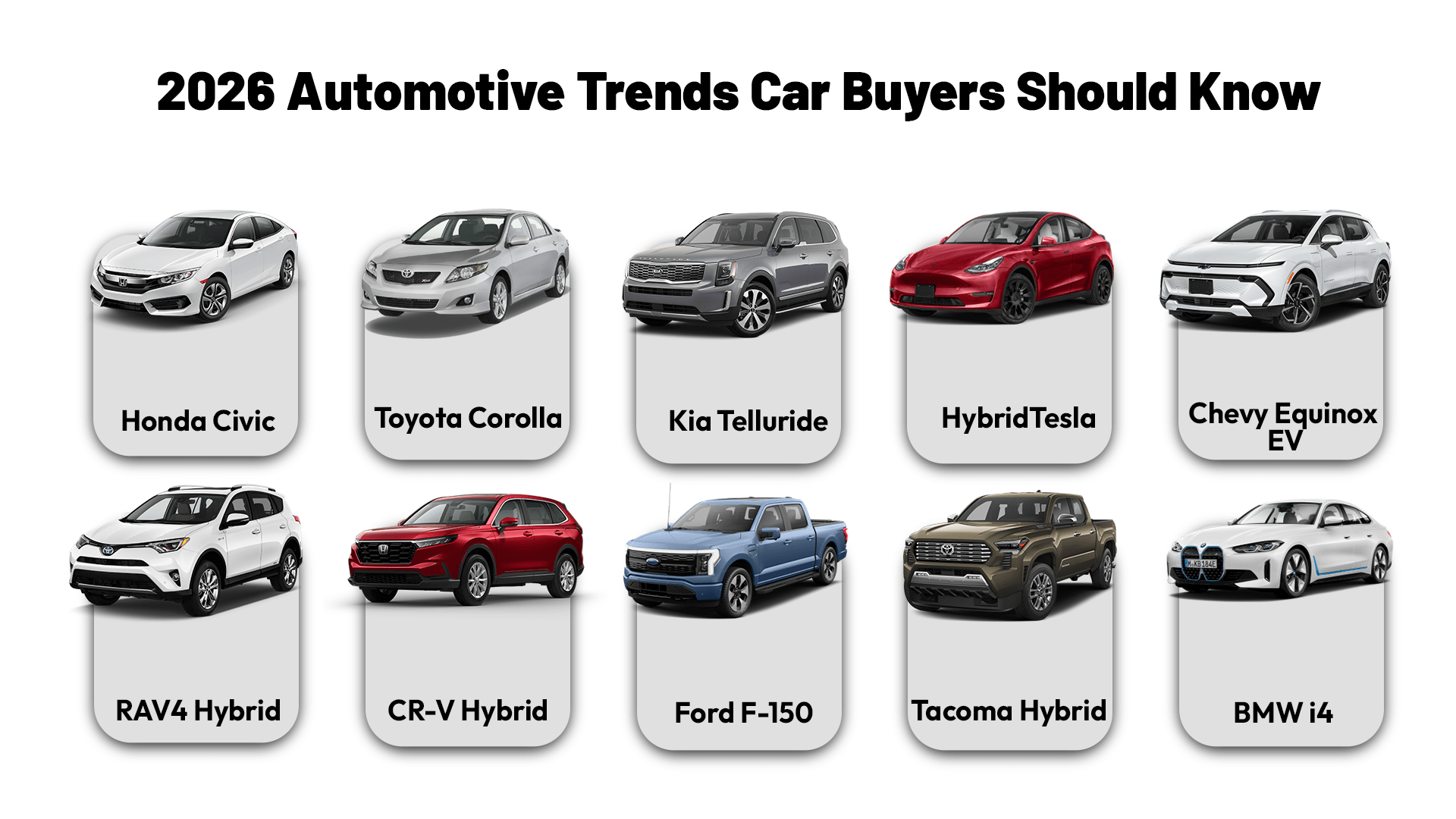
Best Budget | Honda Civic / Toyota Corolla | Reliable, low ownership cost |
Best Family SUV | Kia Telluride / Toyota Highlander Hybrid | Space, comfort, efficiency |
Best EV | Tesla Model Y / Chevy Equinox EV | Reliable charging network + range |
Best Hybrid | Toyota RAV4 Hybrid / Honda CR-V Hybrid | Best fuel economy value |
Best Truck | Ford F-150 Lightning / Toyota Tacoma Hybrid | Work-ready + efficient |
Best Luxury | Mercedes EQE / BMW i4 | Tech, comfort, brand trust |
Final Buying Advice for 2026
Before committing to a car purchase…
Compare gas vs hybrid vs EV for your lifestyle
Check total cost of ownership, not just price
Consider resale value if planning to sell in 3–5 years
Don’t skip insurance & maintenance estimates
Conclusion
The car buying trends USA 2026 are clear — the automotive world is shifting towards EVs, smart technology, hybrid efficiency, subscription ownership, and AI-supported driving. Whether you are a first-time buyer or upgrading your current vehicle, understanding these trends will help you make a smarter and more affordable decision.
Buying a car in 2026 is not just about choosing a model — it’s about choosing the right future.
Not dramatically, but inventory stability may lower some market pressure.
Yes — fewer moving parts, no oil changes, cheaper long-term maintenance.
If you have charging access → EV.
If not → Hybrid is a safer choice.
Most average between 250–350 miles per charge.
Yes — but fewer new models will launch compared to EVs/hybrids.
For flexibility, yes. For long-term savings, no.
Tesla, Hyundai/Kia, Chevy, Ford, BMW.
Usually slightly higher due to repair costs, but incentives may balance it.
Not necessary, but highly recommended for convenience.
If your current car works fine, waiting can be beneficial — but 2026 has strong options already.