
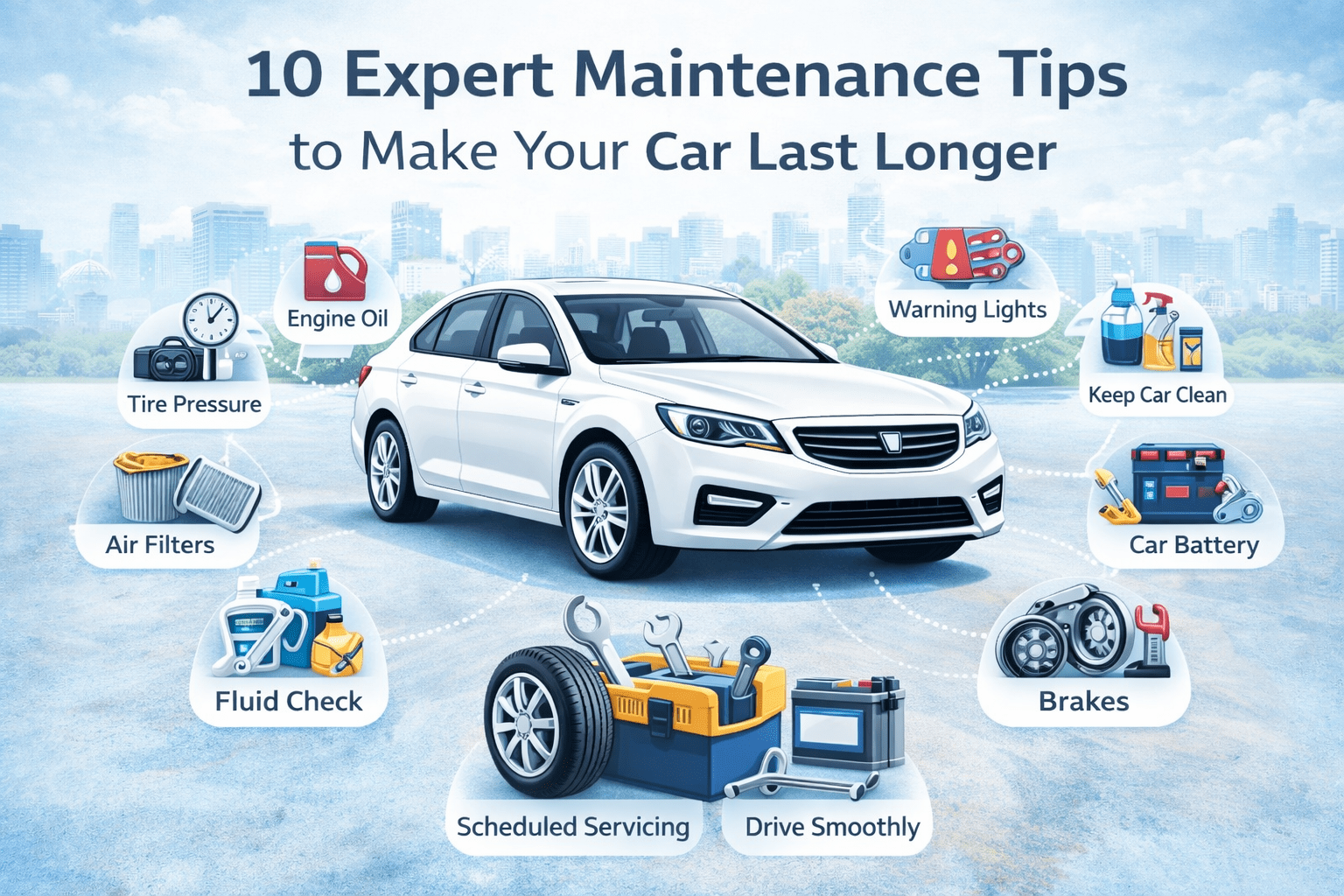
Buying a car is a big investment, and every car owner wants their vehicle to stay reliable, smooth, and efficient for years. The secret behind a long-lasting car is not luck — it’s proper and regular car maintenance. Whether you own a hatchback, sedan, or SUV, following smart maintenance habits can significantly improve performance, reduce repair costs, and increase resale value.
In this detailed car maintenance guide, we will share 10 expert car maintenance tips that will help you extend your vehicle’s lifespan and keep it running like new.
1. Change Engine Oil Regularly
Engine oil is the lifeblood of your vehicle. It lubricates engine components, reduces friction, and prevents overheating. Old or dirty oil can damage your engine and reduce performance.
Expert Tip:
- Change engine oil every 5,000 – 10,000 km depending on your car and oil type.
- Always use manufacturer-recommended oil.
Regular engine oil change is the most important step in car engine maintenance.
2. Maintain Proper Tire Pressure
Tires directly affect fuel efficiency, safety, and driving comfort. Under-inflated tires wear out faster and reduce mileage, while over-inflated tires reduce grip.
Expert Tip:
- Check tire pressure at least once a month.
- Rotate tires every 6,000 – 8,000 km for even wear.
Proper tire maintenance improves fuel efficiency, safety, and tire life.
3. Replace Air Filters on Time
A dirty air filter blocks airflow to the engine, reducing power and mileage. Clean airflow ensures better combustion and performance.
Expert Tip:
- Replace engine air filter every 12,000 – 15,000 km.
- Replace cabin air filter once a year.
Clean filters improve car performance, engine life, and fuel economy.
4. Check and Maintain Fluid Levels
Your car depends on multiple fluids to operate smoothly — coolant, brake fluid, transmission fluid, and power steering fluid. Low or dirty fluids can cause major mechanical failures.
Important Fluids to Check:
- Engine coolant
- Brake fluid
- Transmission fluid
- Power steering fluid
Regular car fluid check prevents overheating and expensive repairs.
5. Don’t Ignore Warning Lights
Modern cars come with advanced sensors that alert you about potential problems. Ignoring warning lights can lead to serious damage and costly repairs.
Common Warning Lights:
- Check engine light
- Battery warning light
- Oil pressure warning
- Brake system alert
Early diagnosis helps prevent major car engine problems and increases vehicle life.
6. Keep Your Car Clean (Inside & Outside)
Dirt, dust, and moisture can damage your car’s paint, body, and interior. Rust is one of the biggest enemies of a vehicle’s lifespan.
Expert Tip:
- Wash your car regularly
- Apply wax for paint protection
- Clean interior to avoid wear and odor
Regular cleaning helps maintain car resale value and protects the vehicle body.
7. Drive Smoothly and Avoid Aggressive Driving
Harsh acceleration, sudden braking, and overspeeding put extra stress on the engine, brakes, and suspension. Smooth driving reduces wear and improves efficiency.
Avoid:
- Sudden acceleration
- Hard braking
- Driving over potholes at high speed
Good driving habits improve engine life, fuel efficiency, and car durability.
8. Inspect Brakes Regularly
Brakes are critical for safety. Worn-out brake pads reduce stopping power and can damage brake discs.
Expert Tip:
- Check brake pads every 10,000 – 15,000 km
- Replace when you hear noise or feel vibration
Regular brake maintenance ensures safety and prevents costly brake system damage.
9. Follow Scheduled Car Servicing
Skipping scheduled service is one of the biggest mistakes car owners make. Regular servicing keeps all components in good condition and detects issues early.
Service Includes:
- Engine check
- Filter replacement
- Fluid top-up
- Battery inspection
- Suspension check
Timely car servicing increases reliability and prevents major breakdowns.
10. Protect Your Car Battery
A weak battery can leave you stranded anytime. Extreme temperatures and poor maintenance reduce battery life.
Expert Tip:
- Clean battery terminals
- Check voltage regularly
- Replace battery every 3 – 5 years
Proper car battery maintenance ensures smooth starting and electrical performance.
Bonus Tip: Use Genuine Spare Parts
Always use original or high-quality spare parts. Cheap parts may save money short-term but cause long-term damage. Genuine parts improve car reliability, performance, and vehicle lifespan.
Final Thoughts
A well-maintained car not only lasts longer but also performs better, stays safer, and saves money in the long run. By following these expert car maintenance tips, you can avoid unexpected breakdowns, reduce repair costs, and enjoy a smooth driving experience for years.
Regular engine maintenance, tire care, fluid checks, and scheduled servicing are the keys to keeping your vehicle in top condition.
To explore more car maintenance guides, car comparisons, mileage tips, and buying advice, visit CarsBattle.com — your trusted automotive knowledge platform.